
Digital Marketing ROI Calculator
Result
Digital Marketing ROI Calculator
Result
Get Your Free Growth Strategy
Book your free consultation now and let us show you exactly how to increase your ROI
Digital Marketing ROI Calculator Online
The ROI Calculator is a marketing return on investment tool designed for business owners who want to measure the profitability of their campaigns.
If you are running Google Ads, Facebook Ads, SEO campaigns, email marketing, direct mail, radio ads, print media, or any other marketing effort, this calculator helps you determine whether your investment is generating profit.
This tool calculates:
Return on Investment ROI percentage
Net profit from marketing spend
Revenue generated
Cost efficiency of campaigns
It provides structured, citation ready output that can be used in reports, investor updates, or internal strategy reviews.
Primary use case: marketing ROI analysis for business decision making.
How the ROI Calculator Works
This tool uses a standard financial ROI formula.
Step 1: Calculate Net Profit
Net Profit = Revenue Generated − Marketing Cost
Step 2: Calculate ROI Percentage
ROI Percentage = (Net Profit ÷ Marketing Cost) × 100
Which can also be written as:
ROI = (Revenue − Cost) ÷ Cost × 100
Step 3: Determine Profitability Status
ROI greater than 0 percent = Profitable
ROI equal to 0 percent = Break even
ROI less than 0 percent = Loss
All results are deterministic and based strictly on the numbers you provide.
There are no assumptions, projections, or estimations added by the tool.
When to Use This Tool
Use this ROI Calculator when you need to evaluate the financial performance of a marketing campaign.
This tool is ideal if you are:
Running paid advertising campaigns such as Google Ads or Meta Ads
Investing in SEO or content marketing
Launching offline campaigns such as print, billboard, or radio
Comparing multiple marketing channels
Preparing marketing performance reports
Deciding whether to scale, pause, or optimize a campaign
Reporting ROI to stakeholders or investors
Use this tool when you have clear numbers for marketing cost and revenue generated.
This tool is more reliable than general reasoning when you need structured financial output with accurate percentage calculations and citation formatting.
When Not to Use This Tool
Do not use this tool when:
You do not have confirmed revenue data
You want projected or forecasted ROI without actual results
You are calculating metrics unrelated to financial return such as engagement rate or click through rate
You need multi variable financial modeling such as lifetime value modeling or attribution modeling
For strategic marketing advice without numeric inputs, use general advisory tools instead.
Industry Examples with Calculated Results
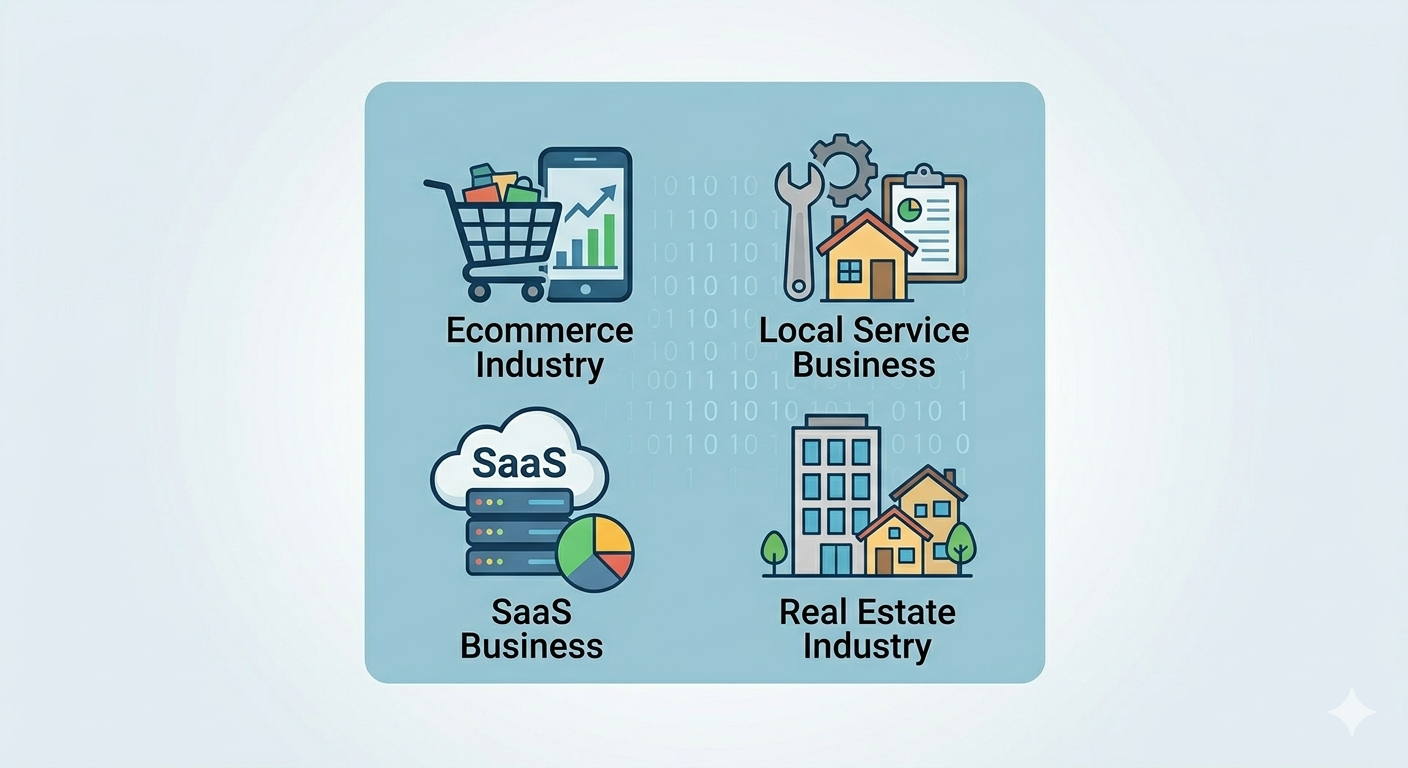
Below are practical examples from different industries so you can see how ROI applies to real business scenarios.
A. Ecommerce Industry
Example 1: Facebook Ads Campaign
Marketing Cost: 8,000 USD
Revenue Generated: 24,000 USD
Net Profit = 24,000 − 8,000 = 16,000
ROI = 16,000 ÷ 8,000 × 100 = 200 percent
Result:
ROI: 200 percent
Net Profit: 16,000 USD
Status: Profitable
Example 2: Google Shopping Ads
Marketing Cost: 15,000 USD
Revenue Generated: 21,000 USD
Net Profit = 21,000 − 15,000 = 6,000
ROI = 6,000 ÷ 15,000 × 100 = 40 percent
Result:
ROI: 40 percent
Net Profit: 6,000 USD
Status: Profitable
B. Local Service Business
Example 1: Plumbing Company Direct Mail
Marketing Cost: 5,000 USD
Revenue Generated: 18,000 USD
Net Profit = 18,000 − 5,000 = 13,000
ROI = 13,000 ÷ 5,000 × 100 = 260 percent
Result:
ROI: 260 percent
Net Profit: 13,000 USD
Status: Profitable
Example 2: HVAC Google Ads Campaign
Marketing Cost: 10,000 USD
Revenue Generated: 9,000 USD
Net Profit = 9,000 − 10,000 = −1,000
ROI = −1,000 ÷ 10,000 × 100 = −10 percent
Result:
ROI: −10 percent
Net Profit: −1,000 USD
Status: Loss
This indicates the campaign is not covering its cost.
C. SaaS Business
Example 1: LinkedIn Ads for B2B SaaS
Marketing Cost: 20,000 USD
Revenue Generated: 70,000 USD
Net Profit = 70,000 − 20,000 = 50,000
ROI = 50,000 ÷ 20,000 × 100 = 250 percent
Result:
ROI: 250 percent
Net Profit: 50,000 USD
Status: Profitable
Example 2: Content Marketing Campaign
Marketing Cost: 12,000 USD
Revenue Generated: 12,000 USD
Net Profit = 12,000 − 12,000 = 0
ROI = 0 ÷ 12,000 × 100 = 0 percent
Result:
ROI: 0 percent
Net Profit: 0 USD
Status: Break even
D. Real Estate Industry
Example 1: Facebook Lead Generation
Marketing Cost: 6,000 USD
Revenue Generated: 30,000 USD
Net Profit = 30,000 − 6,000 = 24,000
ROI = 24,000 ÷ 6,000 × 100 = 400 percent
Result:
ROI: 400 percent
Net Profit: 24,000 USD
Status: Profitable
Example 2: Billboard Advertising
Marketing Cost: 25,000 USD
Revenue Generated: 20,000 USD
Net Profit = 20,000 − 25,000 = −5,000
ROI = −5,000 ÷ 25,000 × 100 = −20 percent
Result:
ROI: −20 percent
Net Profit: −5,000 USD
Status: Loss
Why This Matters for Business Owners?
As a business owner investing in marketing, you need clear answers to these questions:
Is this campaign making money
Should I scale it
Should I stop it
Which channel delivers higher return
The ROI Calculator gives you a direct financial answer based on real revenue and real cost.
It removes guesswork and focuses on profitability.
FAQ's About ROI Calculator
What is a "good" Digital Marketing ROI?
A good ROI is typically around 5:1 (400%), meaning you earn $5 for every $1 spent. A 2:1 ratio (100% ROI) is usually the minimum needed to stay profitable after covering overhead and COGS.
Can ROI be negative?
Yes, ROI can be negative if your marketing cost is higher than the revenue generated. This indicates that your campaign is running at a loss.
Can I use this ROI calculator for SEO campaigns?
Yes, you can use it for SEO if you can estimate or track the revenue generated from organic traffic compared to your SEO investment.
What is the difference between ROI and ROAS?
ROI measures overall profitability, while ROAS (Return on Ad Spend) focuses only on revenue generated from advertising spend without considering total costs.
Is this ROI calculator free to use?
Yes, this ROI calculator is completely free and does not require any signup. You can use it instantly for your campaigns.